
Surging diesel prices threaten higher costs for groceries and household goods
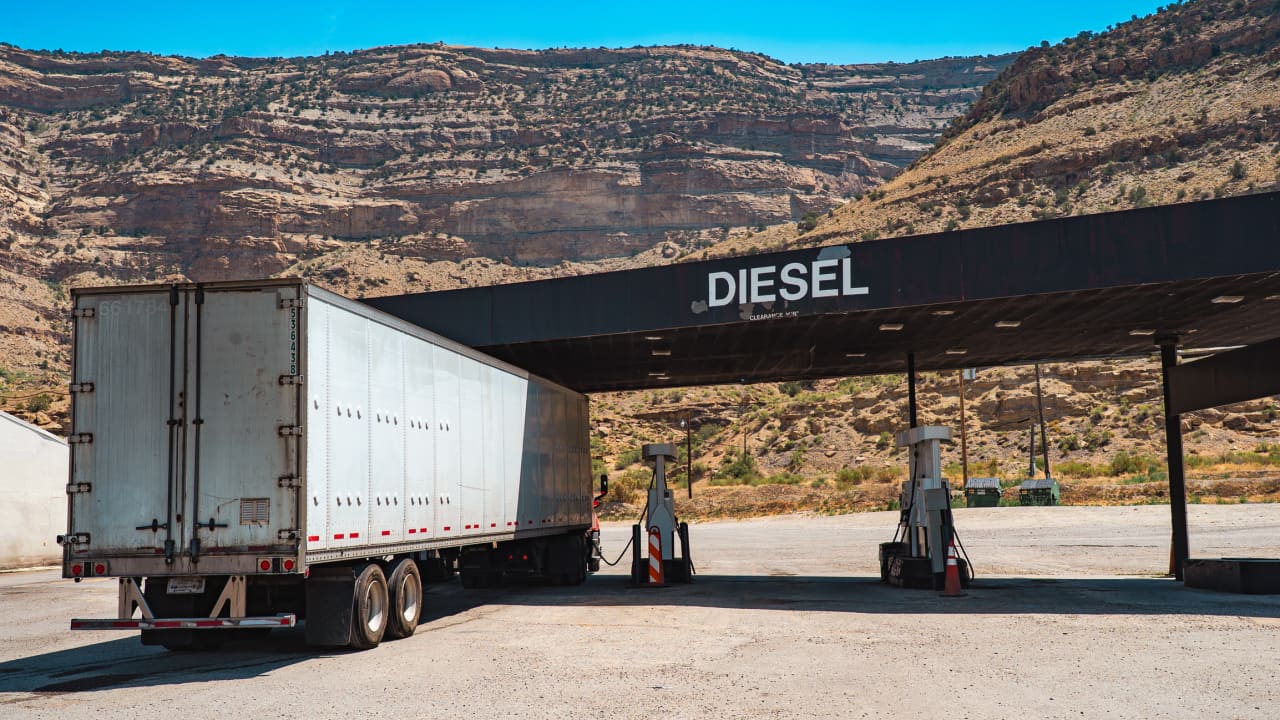
Rising fuel bills are squeezing farmers, truckers and transport operators in the United States and United Kingdom, raising the risk that costs reach consumers.
The Big Picture
Surging diesel prices are adding pressure to the supply chains that move food, clothing and household goods from farms and factories to stores. MarketWatch reported that the diesel-price premium could increase household costs for groceries, clothing and household appliances, though the supplied report did not include specific estimates for those increases.
The strain is already visible among businesses that use large volumes of fuel. Farmers in the US Midwest are beginning the autumn harvest with sharply higher operating costs, while UK haulage and coach companies say narrow profit margins are being pushed toward breaking point.
What Happened
In the Midwest, diesel prices in Illinois, Michigan, Ohio and Indiana rose by more than $3 a gallon in September from a year earlier, according to The Guardian. The newspaper attributed the regional jump to the war with Iran, damaged Russian refineries and local supply disruptions.
Joe Hamilton, who farms 2,500 acres of corn and soybeans in Delaware County, Indiana, told The Guardian that his harvest operation uses about 300 gallons of diesel a day over roughly 30 days, for a total near 9,000 gallons. Estimates cited by the newspaper indicated that higher fuel prices could add $12,500 in costs for every 1,000 acres harvested in the Midwest.
Regional refining problems have compounded the pressure. The Guardian reported that an ExxonMobil refinery in Joliet, Illinois, was shut for more than a week after a power outage and flooding, taking more than 80 million gallons of diesel and gasoline offline. A six-month labor dispute at BP's Whiting, Indiana, refinery has also contributed to the regional price increase, it said.
Why It Matters
Higher diesel costs can spread through the economy because the fuel is central to planting, harvesting, freight transport and deliveries. An estimated 20 billion bushels of corn and soybeans, equivalent to 522 million metric tons, are due to be harvested in the Midwest by the end of November, according to The Guardian.
School transport is also under pressure. Almost 40% of districts that took part in a national survey published in May said they were consolidating bus routes to reduce diesel expenses, while 20% said they had cut non-required trips, including field trips. Ohio alone has about 15,000 mostly diesel-powered school buses carrying roughly 800,000 grade-school students each day, The Guardian reported.
In the UK, average forecourt diesel prices exceeded £2 a litre last week, a record, according to The Guardian. The Confederation of Passenger Transport warned that operators could make difficult decisions about service availability, including home-to-school transport, without support for fuel costs.
What Each Side Is Saying
Richard Smith, managing director of the Road Haulage Association, said UK hauliers were paying about £350 more per truck each week for fuel than before the Iran war. Rhys Hackling, managing director of Direct Connect Logistics, said his company's monthly fuel bill had climbed from about £50,000 to nearly £65,000. He said fixed customer contracts can leave hauliers unable to pass on the additional cost.
The UK government has taken a more reassuring view of physical fuel availability. Transport Minister Keir Mather said the country's fuel supply was "inherently resilient" and that people should not be concerned about shortages. Brent crude fell by nearly 1% on Oct. 5 to just above $101 a barrel, following the G7 announcement on emergency stockpiles.
What Happens Next
G7 leaders agreed to release up to 100 million barrels of emergency crude and refined-product stockpiles over four months, including an early diesel release. CNBC reported that the announcement sent European gasoil futures down 5.75%.
Yet analysts cited by CNBC cautioned that the measure may offer only temporary relief. Goldman Sachs expects refining capacity outside China to contract by roughly 300,000 barrels per day in 2026, while about 2 million barrels per day of Middle Eastern refining capacity remains offline. Saudi Aramco chief executive Amin Nasser said emergency reserve releases might provide supply for a winter but would not solve longer-term diesel constraints.
For households, the direction of prices will depend on how long fuel costs remain elevated and how much businesses can absorb before raising prices. For now, farms, freight operators and passenger transport providers are warning that the burden is becoming harder to contain.
The world's most important stories. Explained clearly. Delivered daily.
- Every morning
- Five-minute read
- Unsubscribe anytime