
SS United States sinks off Florida to become a record-sized artificial reef
The former speed-record ocean liner went under Wednesday after preservation plans ran out of money.
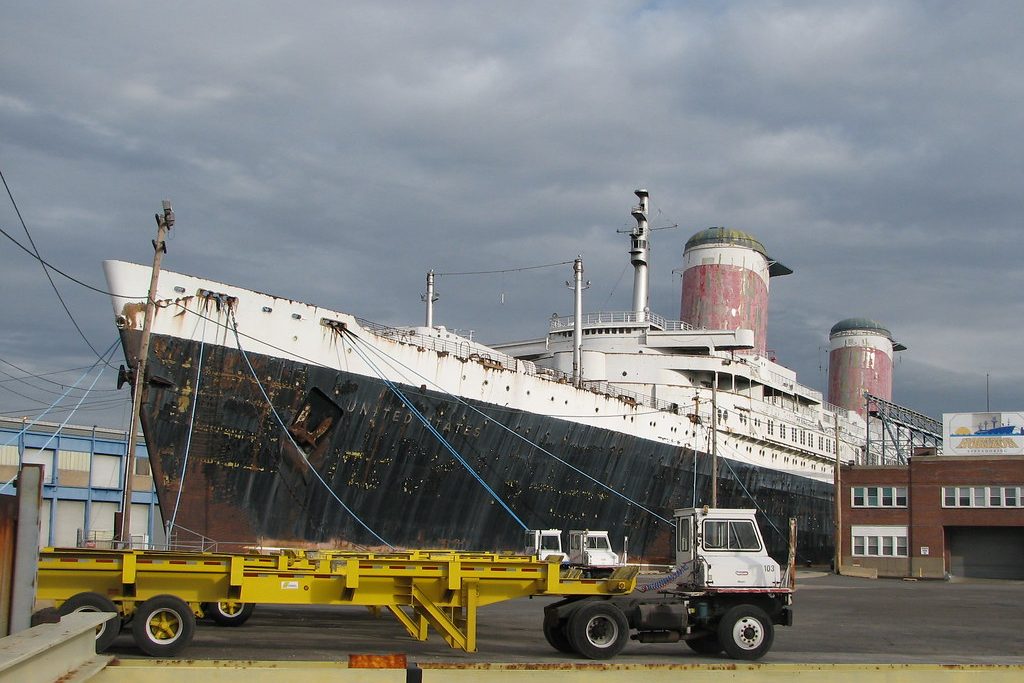
The fastest passenger liner in the world crossed the Atlantic in less than four days. On Wednesday, the SS United States went under off the Florida Panhandle in about five hours.
The 1,000-foot ship was deliberately sunk about 20 nautical miles offshore, between the Destin-Fort Walton Beach area and Pensacola. It is expected to become the world's largest purpose-sunk artificial reef, a new destination for divers and, eventually, marine life.
How it went down: Crews prepared the liner in Mobile, Alabama, removing fuel, wiring and other environmentally unsafe materials before cutting openings through the ship. The controlled sinking used no explosives. NPR reported that crews removed plugs in the hull to let water in, and that the ship tilted onto its side before disappearing below the waves.
That is a strange ending for a vessel built to move fast. The SS United States entered service in 1952 and set a transatlantic speed record on its maiden voyage that still stands. During nearly two decades at sea, it carried four U.S. presidents, royalty, celebrities and tens of thousands of other passengers. Jet travel made the old liner business obsolete, and the ship was withdrawn from passenger service in 1969.
Why it ended here: The ship spent nearly 30 years docked in Philadelphia, where supporters of the SS United States Conservancy tried to find a way to preserve it as a museum, hotel, restaurant or event venue. None produced enough funding to keep the ship afloat in the literal sense.
Okaloosa County bought the vessel from the conservancy for about $1 million in 2024, then towed it to Alabama in 2025 for remediation. CBS News reported the county spent about $13 million on preparing it for reefing, funded through tourist-tax revenue. County natural-resources chief Alex Fogg put the preservation problem bluntly: “There was no viable plan, no funding.”
The new pitch: The county already has hundreds of artificial reefs and hopes the SS United States will draw divers, overnight visitors and their spending to the Panhandle. That is the economic argument. The environmental one is that the cleaned structure will provide habitat in an area with little natural reef.
A land-based museum preserving the ship's history is planned, with its two massive funnels intended to serve as bookends. The thing to watch now is whether the old ocean liner becomes the year-round diving draw Okaloosa County paid to build.
The world's most important stories. Explained clearly. Delivered daily.
- Every morning
- Five-minute read
- Unsubscribe anytime