
Saudi-led coalition says Yemen offensive targets Houthi Red Sea gains
The coalition says 100 fighter jets are backing government-aligned forces near the Bab al-Mandab strait, while the Houthis dispute claims of a retreat.
The Big Picture
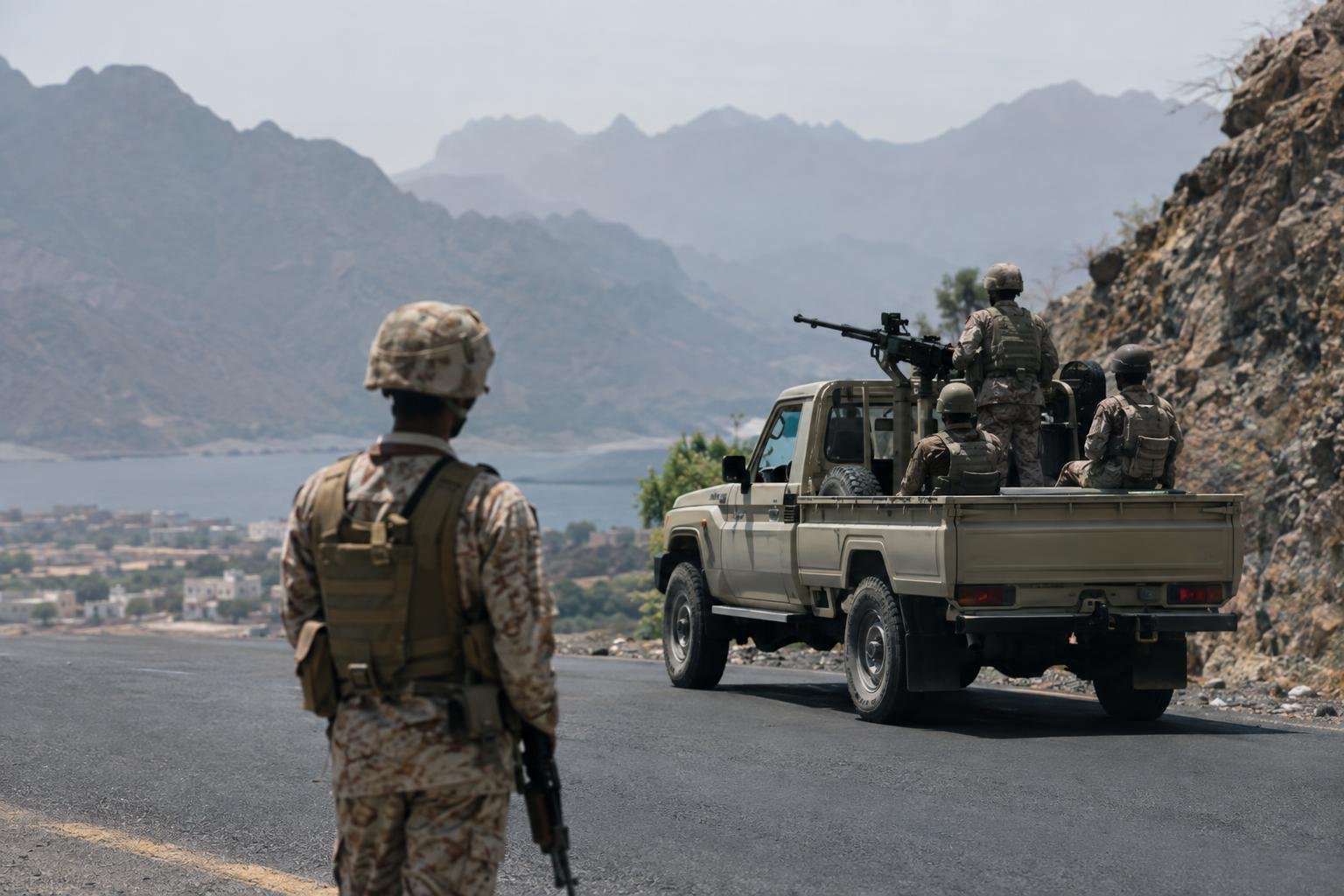
A Saudi-led coalition says it has begun a major air and ground campaign against Houthi forces in Yemen, focusing on territory near the Bab al-Mandab strait, a vital passage linking the Red Sea and the Gulf of Aden. The operation follows recent Houthi advances along Yemen's western coastline that, according to The Guardian, reached the strait and included the seizure of strategic islands.
The coalition's stated objective is broader than reopening coastal routes. Yemeni officials told The Guardian that the Saudi-backed offensive aims to retake all territory held by the Houthis, who have controlled the capital, Sana'a, since 2014.
What Happened
Reuters reported on Oct. 3 that Saudi Arabia was preparing a Yemeni-led ground offensive backed by airstrikes, with possible options ranging from a concentrated coastal push to attacks on several fronts. By Oct. 5, the Saudi-led coalition said an air campaign, called Operation Dawn of Yemen, was under way.
Coalition spokesperson Maj. Gen. Turki al-Maliki said 100 fighter jets were supporting forces aligned with Yemen's internationally recognized government. He said the coalition had established what it called “air protection” over Bab al-Mandab and had destroyed hundreds of Houthi targets.
The Guardian reported that the Giants Brigades, southern Yemeni forces allied with the government, opened a ground offensive on the eastern flank of the Houthi-held coastal zone. Airstrikes were also reported in Sana'a and Saada, with command centers, camps and weapons depots described as targets.
Yemeni officials said government-aligned forces recaptured Dhubab, north of the strait, as well as the towns of Bab and Hadeid. Witnesses told The Guardian they saw government tanks and troops enter those towns. Al Jazeera separately reported that Yemeni forces had reclaimed the strategic port city of Mocha.
What Each Side Is Saying
Coalition officials said Houthi fighters were under pressure around Dhubab and that forces had cut the road between Mocha and Dhubab. The Guardian said footage appeared to support reports of Houthi fighters withdrawing along the seashore, while noting that earlier Saudi-led claims of territorial gains had often proved only partial.
The Houthis denied reports of a retreat. Their military spokesperson, Yahya Saree, said the group launched ballistic missiles and drones at Saudi Aramco sites in Riyadh and the eastern Khurais area, claiming the attacks caused large fires. Saudi Arabia had not immediately confirmed that claim.
Fighting has also continued near Taiz. Sources on both sides told AFP that more than 70 people were killed over one day in and around the province, including 34 government troops reported dead by government sources and 39 Houthi fighters reported dead by Houthi sources.
Why It Matters
Bab al-Mandab is a major international shipping chokepoint. The coalition's focus on the strait underscores Saudi concerns that Houthi territorial gains could deepen disruption to Red Sea traffic and expose Saudi Arabia to further attacks.
The conflict also risks drawing in additional regional partners. Al Jazeera reported that Turkiye and Pakistan agreed during emergency talks in Riyadh to send rapid-deployment forces to Saudi Arabia under the Mecca defence pact. The scope, timing and role of any such deployment were not detailed in the report.
What Happens Next
The immediate question is whether government-aligned forces can hold any regained coastal towns and extend their advance toward larger Houthi positions. The operation is also unfolding alongside continued Houthi pressure around Taiz and unverified claims of attacks on Saudi oil facilities.
The competing battlefield accounts make the scale of either side's gains difficult to independently assess. What is clear is that the campaign has opened a more direct contest for control of Yemen's coast and the approaches to one of the world's most important maritime corridors.
The world's most important stories. Explained clearly. Delivered daily.
- Every morning
- Five-minute read
- Unsubscribe anytime