
Kenya confirms first Ebola death after case linked to DRC outbreak
A Kenyan man who travelled from the Democratic Republic of the Congo via Uganda died in Nairobi after testing positive for Ebola.
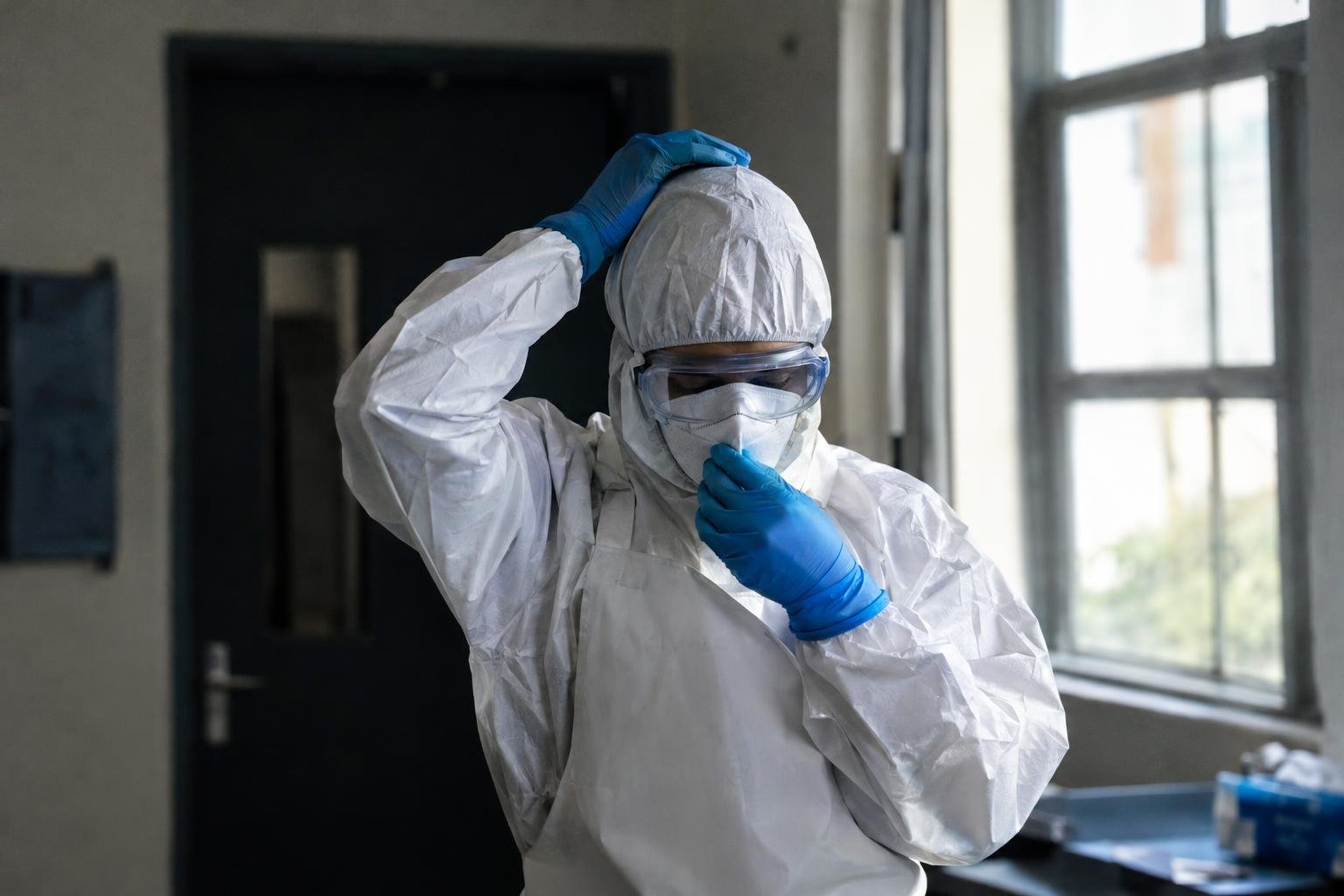
The Big Picture
Kenya has recorded its first confirmed Ebola case and first Ebola-related death, health authorities said on 6 October, raising concern about the regional spread of an outbreak that has killed thousands in the Democratic Republic of the Congo.
The patient, a Kenyan man who had been living in the DRC, travelled to Nairobi through Uganda and died after being isolated at Nairobi Hospital, according to Kenya's health minister, Aden Duale. The World Health Organization said the case was likely imported from the DRC, where an outbreak of the Bundibugyo species of Ebola has been under way since May.
Kenyan authorities have intensified surveillance and response measures at airports and land border crossings while they trace people who may have come into contact with the patient.
What Happened
The man had been ill for about a month before reaching Kenya, according to multiple reports. The Guardian reported that he had received treatment in the DRC, then travelled overland to Kampala, Uganda's capital, before flying to Nairobi on 3 October.
After arriving at Nairobi's international airport, he was taken by a relative and a friend to Nairobi Hospital, where he was immediately isolated, Duale said. The health minister said the patient had fever, chills, severe fatigue, weakness, muscle pain, painful swallowing, sore throat and bleeding beneath the skin at injection sites.
He was confirmed to have Ebola and died later on 6 October. He was buried the same day under health-safety guidelines, the BBC and The Guardian reported.
Authorities have released differing figures for the people being monitored. The Guardian reported that officials had identified 28 contacts, including relatives and health workers, and were seeking 23 fellow passengers and four crew members from the flight. The BBC reported that 10 contacts had been quarantined and 57 others were being traced. Reuters, as cited in the provided material, reported 29 quarantined contacts and 27 people from the flight being traced.
Why It Matters
The death marks a significant test for Kenya's public health system. Nairobi is a major regional transport hub, and the case has prompted questions about how a patient who had been ill for weeks travelled across several locations without being detected.
Africa Centres for Disease Control and Prevention director Jean Kaseya told the BBC that the patient travelled from Buta to Kisangani in the DRC, flew to Beni, travelled by road to Uganda and then flew to Nairobi. Kenyan health ministry official Patrick Amoth said the patient may have taken medication that masked symptoms, the BBC reported.
Uganda said the man had transited through the country for less than 24 hours and had a normal temperature when he departed. Kaseya told the BBC that temperature screening alone can be unreliable, since medication can suppress a fever and quick Ebola diagnostic testing is not available at border points.
Background
The current DRC outbreak began in May and is caused by the Bundibugyo species of Ebola virus. There is no approved vaccine or specific treatment for that strain, although trials are under way, according to the BBC and The Guardian.
As of 2 October, the DRC had recorded 8,463 confirmed cases and 4,082 deaths, The Guardian reported. The outbreak has spread from Ituri province to seven provinces in the north and east of the country, where conflict, resource shortages and distrust of authorities have complicated the response.
The impact on children has been particularly severe. UNICEF said that, as of 29 September, at least 2,017 children in the DRC had confirmed Ebola and at least 1,062 had died. More than 1,900 children have lost or been separated from one or both parents or caregivers since the outbreak was declared, UNICEF said.
What Happens Next
Kenya says it has response teams in place and has designated facilities at four major hospitals to manage Ebola patients, including Nairobi Hospital. A spokesperson for President William Ruto said more than 650,000 travellers had been screened and 267 samples tested.
Health officials have urged the public not to panic, while the WHO and regional health bodies work with Kenyan authorities on contact tracing and containment. The outcome will depend in part on whether officials can quickly identify, monitor and isolate anyone exposed to the patient.
The world's most important stories. Explained clearly. Delivered daily.
- Every morning
- Five-minute read
- Unsubscribe anytime