
Army set to detonate 9,700 pounds of unstable lead explosive in Iowa
A federal appeals court cleared the way for Wednesday's controlled blast, despite environmental groups' warnings about lead dust over homes and farms.
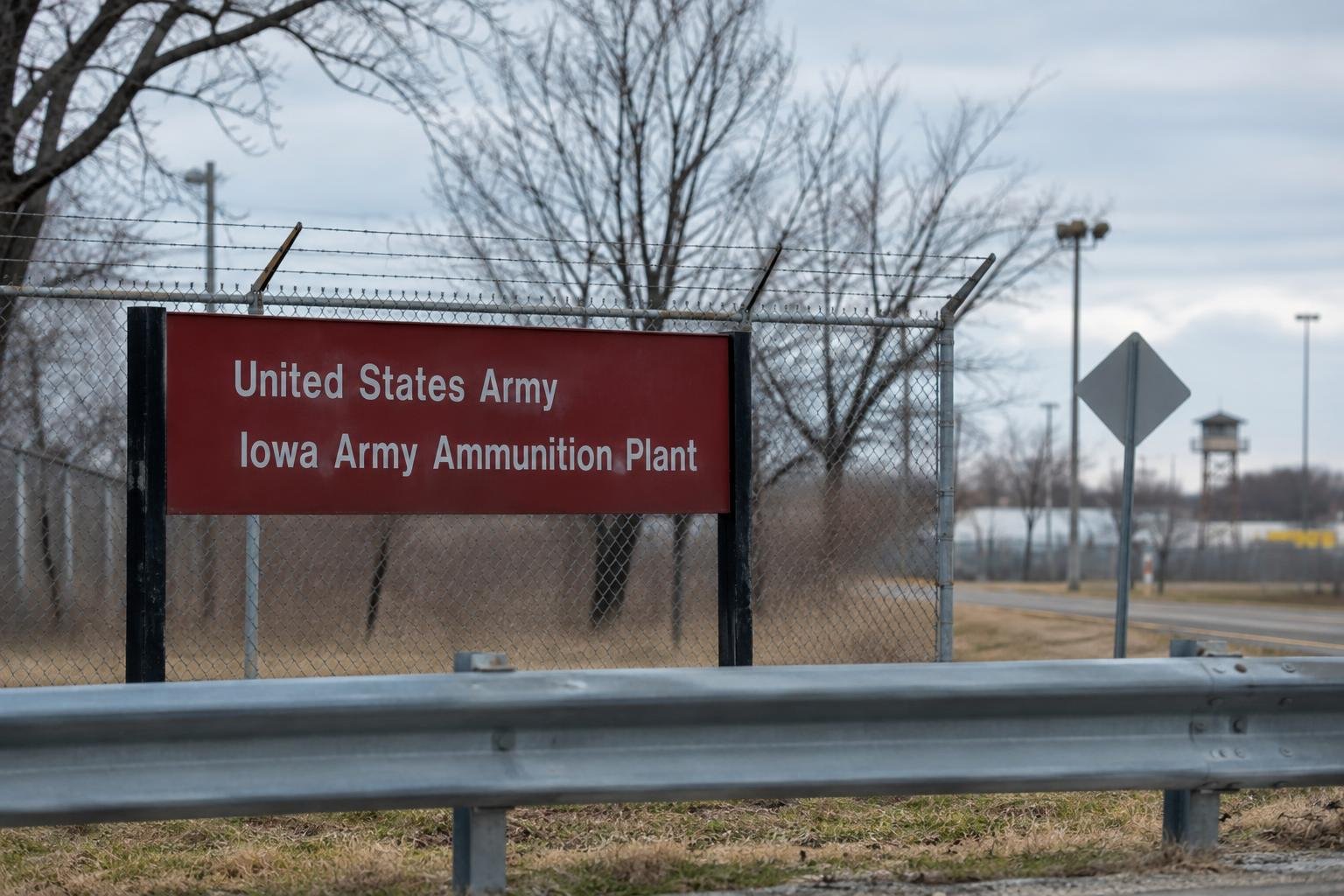
Nearly 10,000 pounds of an explosive that has become too unstable to move is set to be blown up at an Iowa ammunition plant Wednesday morning, with lead dust expected to leave the blast site.
The Army plans to detonate 68 drums of degraded lead azide at the Iowa Army Ammunition Plant in Middletown. The material had been stored there for more than 20 years. The Army says liquid in the drums evaporated, allowing the explosive to recrystallize and become increasingly sensitive to friction, shock and cold temperatures.
Why it matters: Lead azide is not just an explosive problem. It contains lead, and the Army has said the blast will produce a dust plume containing some of it. Federal officials say there is no safe level of lead exposure, with particular risks for young children, pregnant women and people with chronic illnesses. Residents and environmental groups worry the dust could settle on homes, farms, waterways, playgrounds and outdoor surfaces.
The Iowa Environmental Council and Sierra Club's Iowa chapter sued to block the EPA emergency permit for the operation, arguing that communities got too little notice and that safer disposal options were not adequately considered. The Eighth Circuit Court of Appeals first paused the permit, then declined Monday to stop the detonation, finding the groups had not shown they were likely to win their challenge.
The Army's case: Officials say the alternative is not leaving the drums alone indefinitely. They argue that worsening cold increases the chance of an uncontrolled explosion, without the barriers and dust-control measures available in a planned blast. The Army says it considered moving and chemically neutralizing the material, but concluded those options could trigger an accidental detonation.
Its containment plan includes earth-covered concrete magazines, sand-filled blast barriers, water, misters, foams and gels intended to limit the spread of lead particles. People within about five miles may evacuate, while those within roughly 20 miles have been advised to stay inside, close windows and doors, and limit outdoor exposure. The Army has said a plume could travel much farther depending on weather.
The political detour: President Trump said Monday he had ordered the military to wait for the court and Iowa Gov.-elect Rob Sand. After the court ruling, acting Army Secretary Adam Telle said the operation would proceed. Sand said the Trump administration should make the call based on its experts' information, while asking for more public transparency.
Reports differed on whether the blast is scheduled for 9 a.m. or 10 a.m. Central time Wednesday, but the thing to watch is where the wind sends the dust after it leaves Middletown.
The world's most important stories. Explained clearly. Delivered daily.
- Every morning
- Five-minute read
- Unsubscribe anytime