
68 killed after high-speed train rear-ends another in central Spain
A Renfe train struck a stopped Iryo service near Urda after a signalling failure and a control-centre decision to resume travel.
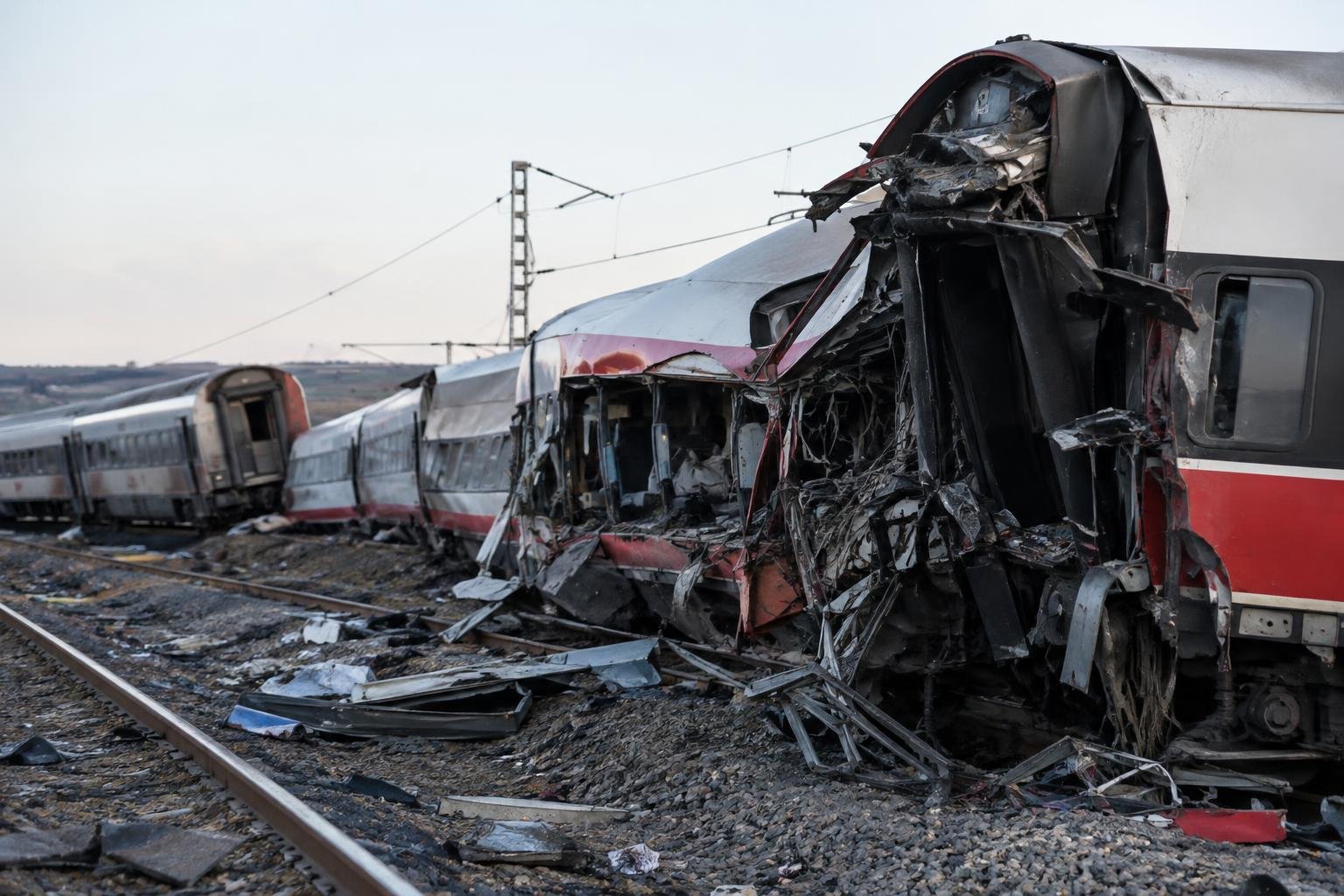
José Manuel Chacón, a 31-year-old Guardia Civil officer, was among 68 people killed when one high-speed train crashed into another near Urda in central Spain on Wednesday morning.
The Renfe train was travelling from Madrid toward Seville when it struck the back of a stationary Iryo train on the Madrid to Andalusia route. The two services carried 544 people, 397 on the Renfe train and 147 on the Iryo train. At least two carriages derailed, with cars falling down an embankment near the crash site.
The toll: Another 107 people needed hospital treatment, including 15 in serious condition. Emergency crews worked through the night around the wrecked carriages, while the Civil Guard opened offices in Madrid, Toledo, Córdoba and Seville where relatives could provide DNA samples to help identify victims. The work of telling families what happened has begun alongside the work of finding out who is still there.
What went wrong: Transport Minister Óscar Puente said a computer malfunction disabled the LZB signalling system at about 8:30am across a 63km stretch of track, stopping roughly six trains. He said the Madrid control centre then allowed the Renfe train to resume normal travel without speed restrictions even though a stop signal remained active.
Puente called those circumstances “inexplicable” and said the available evidence pointed to an erroneous control-centre decision, while stopping short of assigning formal responsibility. Prime Minister Pedro Sánchez said the causes remain under investigation and said any negligence or safety-system failures would be addressed with “utmost firmness.”
Why it cuts deeper: This was Spain’s second fatal high-speed rail crash this year, and again involved Renfe and Iryo on the Madrid to Andalusia line. A January collision near Adamuz killed 46 people. High-speed services between Madrid and southern Spain are suspended, and Spain began national mourning on Oct. 29, running through Oct. 31.
The open question is how a train was allowed to proceed normally on a line where the system designed to keep trains apart had failed.
The world's most important stories. Explained clearly. Delivered daily.
- Every morning
- Five-minute read
- Unsubscribe anytime